
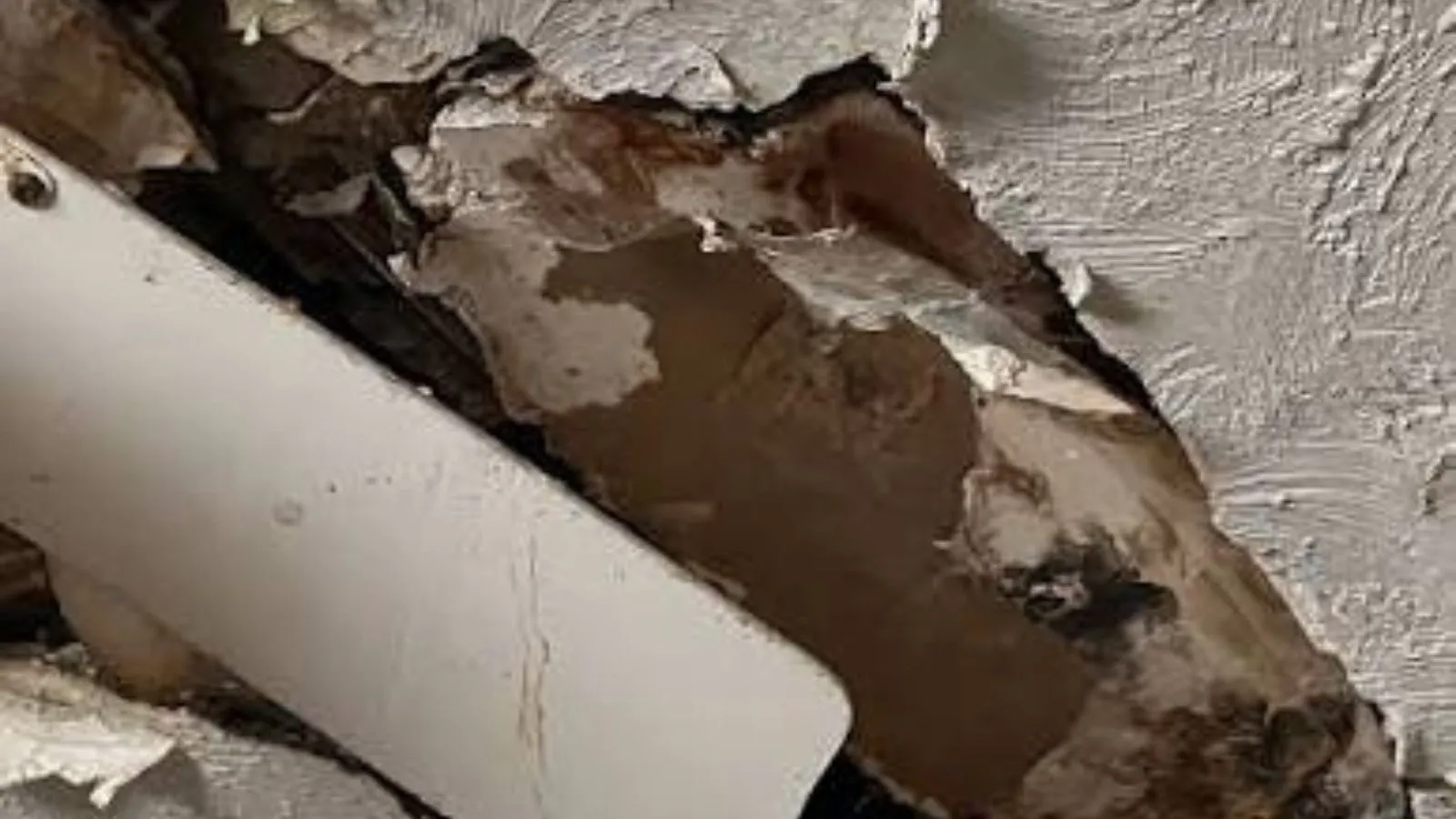
Drywall soaks up water like a sponge and can look dry before it is. If a wall in your Irvington home is stained, soft or bubbling after a leak, call (973) 913-7863.
Wall and drywall water damage repair measures moisture, removes boards that are beyond saving, dries the cavity and framing and prepares the wall for rebuild. The aim is to keep as much as possible.
A ceiling is covered on the ceiling water damage repair page, and the pipe failures behind many wall leaks are on the burst pipe page.
Signs a wall is wet
| Sign | What it suggests | Next step |
|---|---|---|
| Stain or ring on the surface | Water has soaked through | Meter the wall and find the source |
| Bubbling or peeling paint | Moisture behind the surface | Check the cavity |
| Soft or crumbling board | Drywall has lost strength | Remove the damaged section |
| Cold, damp surface | Moisture in the cavity | Thermal imaging and meter |
| Swollen baseboard | Water at the wall base | Check the bottom plate |
Safety checklist for a wet wall
- Keep outlets and switches on a wet wall off until a qualified person checks them.
- Stay clear of ceilings or walls that sag or bulge.
- Do not cut into a wet wall near wiring or pipes.
- Move furniture and electronics away from the wall.
- Photograph the wall before anything is opened.
Open only what is wet
Drywall that is stained but firm and reads wet may be dried through small holes or removed baseboards. Soft, crumbling or contaminated board is cut out, usually a few inches above the wet line.
Wet insulation is removed, since it holds water against the framing. Air movers push air through the cavity, and dehumidifiers dry the room. Readings are logged until the framing is dry.
Rebuild after drying
Patching, texturing and painting come only after the wall is dry. Closing it early traps moisture. The wider drying process is explained on the structural drying page.
First steps for a wet wall
Stop the source if you can, then move furniture away from the wall and take down pictures and shelves. Remove baseboard trim only if it is already loose, and leave the rest to the crew.
Do not poke or press on a stain, because wet drywall tears easily. Do not paint, caulk or seal the wall until it is dry, since sealing hides moisture and the stain will come back.
Photograph the wall with a ruler or coin for scale, and note the date. A second photo a day later shows whether the stain is growing.
Plaster, tile backer and other wall types
Older homes may have plaster and lath, which dries differently from drywall and often survives a leak better. Bathroom walls may have cement board or tile backer that tolerates water but not the framing behind it.
Tell the crew what the wall is made of if you know, and mention any recent repairs. They will confirm the material with a meter and a small inspection opening before deciding how much to open.
Questions to ask before walls are cut open
Ask how far the moisture readings extend and how high the cut will go. A cut a few inches above the wet line is normal, while a cut to the ceiling needs a reason.
Ask whether insulation behind the wall is wet and whether the bottom plate of the framing was measured. Those two answers tell you how long drying will take.
Wall wet or stained? Call and tell us where and how it started.
☎ Call (973) 913-7863What shapes the cost of wall and drywall water damage repair
Cutting less costs less, so early drying matters.
| Factor | Why it moves the price |
|---|---|
| Wet height | Higher wicking means more drywall removed |
| Insulation | Wet insulation is removed and replaced |
| Water type | Contaminated board is always removed |
| Wall finish | Textured or painted surfaces add matching work |
| Drying days | Cavities dry slowly |
| Rebuild scope | Patching and paint are separate |
Until a technician has looked at the damage, a wall and drywall water damage number is only an estimate of an estimate. For a number that fits your home, call (973) 913-7863 and walk through the damage.
Wall damage and insurance
Sudden leaks that wet drywall are often covered, while long-term seepage often is not. Photograph the stain, the wet wall and any removed material before disposal.
Wall notes for Irvington
Older plaster walls dry differently from drywall, and the crew will tell you what yours is. A tenant's first step is a dated written notice to the landlord.
Questions about wall and drywall water damage in Irvington
Can wet drywall be dried instead of replaced?
Sometimes, if it is firm and the water was clean. Soft or contaminated board is replaced.
How high does water wick up a wall?
It varies with the time and the water, so the crew meters the wall and removes drywall above the wet line.
Should I paint over a water stain?
Not until the wall is dry and the source is fixed, otherwise the stain returns.
Do I need to remove baseboards?
Often, to let air reach the cavity.
Meters show what is wet, and drying early keeps more of the wall.
☎ Call (973) 913-7863