
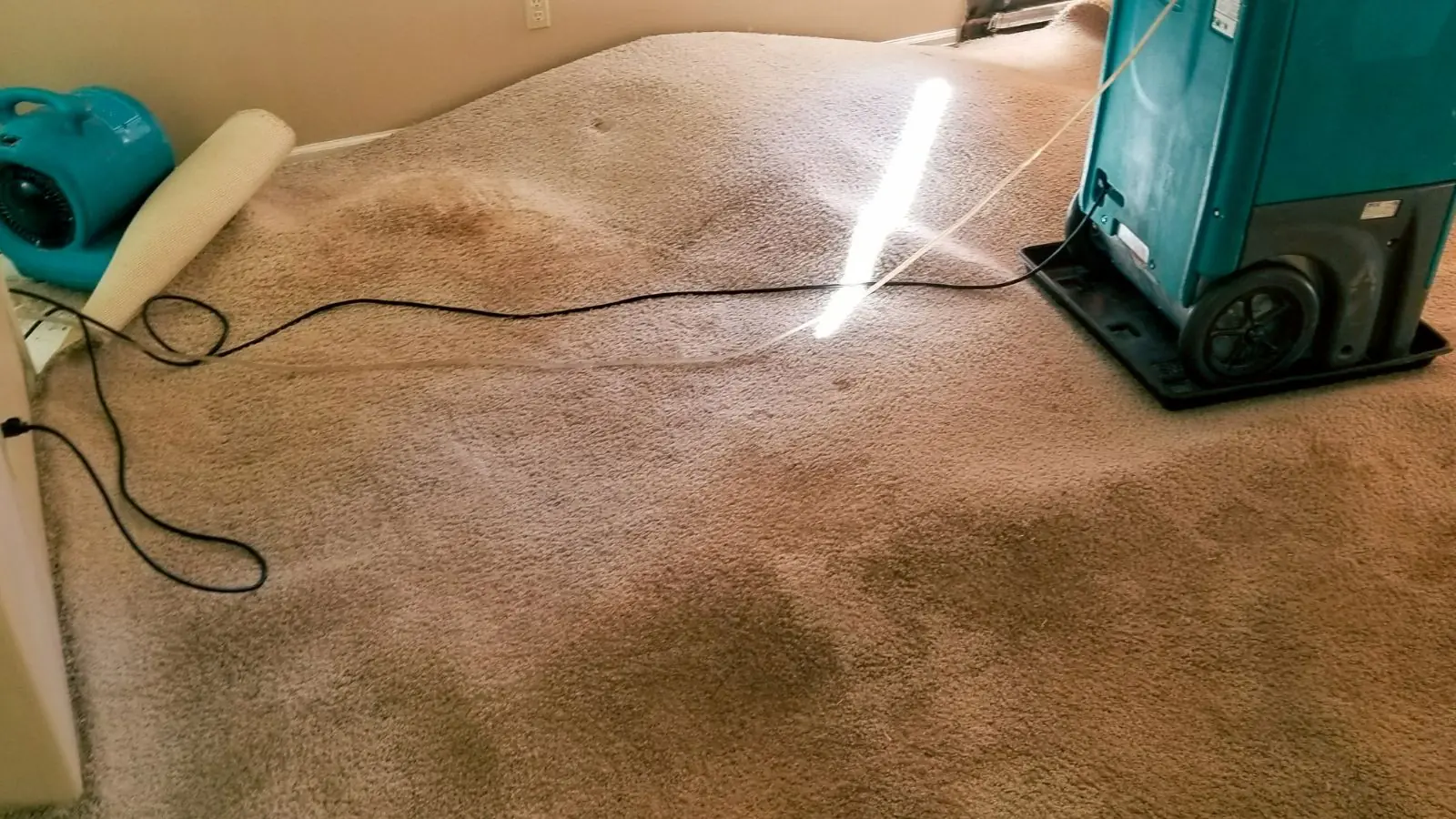
When water reaches a shop floor, an office suite or the apartments over a storefront, the cost clock runs on both the building and the business. If you are standing in a wet commercial space in Irvington, call the 24/7 dispatch line at (973) 913-7863, shut off the water if you know where the valve is, and move inventory and electronics off the floor.
Commercial water damage restoration covers the same technical steps as a home loss, which are extraction, structural drying and documentation. The difference is scale and scheduling. Larger floor areas, shared walls and tenants who need their space back all change how crews stage equipment and in what order they work.
This page is for businesses and multi-unit properties. For a single-family loss the starting points are water extraction and structural drying, which commercial work also uses at larger scale.
When a commercial water loss is an emergency
A commercial loss is an emergency when water is near electrical equipment, when it is moving into a neighbor's unit, or when it is spreading across a floor that holds stock, records or point-of-sale equipment. Each of those turns a small cleanup into a larger claim.
Shut off power only if it is safe
In a building with a shared panel, do not stand in water to reach a breaker. Call the building manager or the utility for any electrical risk. Contact the property owner or landlord at once if the source may be in a shared pipe, since only they can authorize some repairs.
After-hours losses are common in commercial buildings, because a failed line can run unnoticed overnight and is found when the doors open. The dispatch line answers at any hour and offers same-day response when crews are available, so a Sunday-morning discovery does not have to wait until Monday.
How commercial restoration is planned
The first visit is a walkthrough with moisture meters and thermal imaging, mapping which floors, walls and ceilings are wet and where water traveled. In a building that stacks retail under offices or apartments, water from an upper floor often shows up in a lower tenant's ceiling, so the map crosses unit lines.
- Stop the source and secure electrical hazards with the owner or manager.
- Extract standing water with pumps and truck-mounted or portable extraction units.
- Move or protect inventory, records and equipment, and photograph them first.
- Set air movers and LGR dehumidifiers sized to the floor area and ceiling height.
- Monitor readings on each visit and adjust equipment until the structure is dry.
- Deliver moisture logs and photos for the insurer, the landlord or the tenant.
Working around downtime
Most businesses cannot close for a week, so the practical question is which part of the space can stay open. Containment with plastic sheeting, drying one zone at a time and scheduling noisy extraction before opening hours are all ways crews try to keep a section usable.
Tell the dispatcher your opening hours and which areas hold the cash register, servers or stock. That one conversation changes the order in which rooms are dried.
Common commercial water problems by property type
| Property type | Frequent source | What to tell the dispatcher |
|---|---|---|
| Retail storefront | Roof drains, supply lines to sinks and restrooms | Where stock and the counter sit |
| Office suite | Upstairs supply lines and HVAC condensate | Which floor the water came from and where servers are |
| Restaurant | Dishwasher, prep sink and grease line failures | Whether food storage or the kitchen floor drain is affected |
| Mixed-use building | Apartment plumbing above a ground floor shop | Which units are above and below the wet area |
| Multi-unit residential | Shared risers, water heaters and appliances | Every unit that has wet ceilings or walls |
Sewage-contaminated water in a commercial space changes the plan again and is described on the sewage backup cleanup page. A burst line in a ceiling is covered separately under ceiling water damage repair.
Water in a business space? Call with the address, the floor and the opening hours so crews can plan around your day.
☎ Call (973) 913-7863What shapes the cost of commercial water damage restoration
Commercial pricing follows scale and access more than any single rule of thumb.
| Factor | Why it moves the price |
|---|---|
| Floor area and ceiling height | Larger volumes need more air movers and dehumidifier capacity |
| Water category | Contaminated water adds removal and sanitizing to the drying work |
| Number of tenants or units affected | Each wet unit adds visits, containment and documentation |
| Contents and equipment | Moving, protecting or pack-out of stock and records takes labor |
| Working hours | After-hours work to protect business hours changes scheduling |
| Rebuild scope | Ceiling tiles, flooring and drywall replacement is a separate stage |
Until a technician has looked at the damage, a commercial water damage number is only an estimate of an estimate. Call (973) 913-7863 and describe what is wet so the scope and price can be explained.
Commercial water loss and insurance
A business may hold a commercial property policy, a landlord policy, a tenant policy or a mix, and which one responds depends on who owns what and how the water got in. Some policies include business interruption coverage, and some do not, so ask your broker or insurer what yours contains.
Keep photos, moisture logs, receipts and a list of damaged stock. Tell your landlord or property manager early if the source may be a shared pipe, because responsibility often depends on where the failure began.
Commercial notes for Irvington
Irvington's main streets include Springfield Avenue, which is state Route 124 and runs from the township toward Maplewood and Morristown, and Clinton Avenue, where this business is based. Many buildings along streets like these pair ground floor retail with offices or apartments above, which is why one upstairs failure can reach more than one tenant. Calls from the Springfield Avenue core are covered on the Irvington Center page.
Ask the township building department which permits apply before any rebuild work in an occupied commercial space, and check your lease for who handles repairs to ceilings and shared lines.
Questions about commercial water damage in Irvington
Can my business stay open during restoration?
Often part of it can. Crews use containment, work in zones and schedule noisy tasks outside opening hours where possible, but whether you can stay open depends on safety, electrical hazards and how widely water spread.
Do you work in multi-unit buildings with several tenants affected?
Yes. Multi-unit losses involve more units, more documentation and coordination with the owner or manager, and the first walkthrough maps which units share the wet walls and ceilings.
What records should a business keep after a water loss?
Keep dated photos, the moisture logs the crew produces, receipts for emergency work, and a list of damaged stock and equipment. Those records help your insurer and your landlord.
Who pays when the water came from a neighbor tenant?
That depends on your lease, the building's policies and the cause of the failure, so ask your landlord and insurer. The crew can document where the water came from and which areas it reached.
Do you handle commercial water damage emergencies at night or on weekends in Irvington?
Yes. Commercial dispatch is answered around the clock on (973) 913-7863, including nights, weekends and holidays. Same-day response is offered when crews are available, and the dispatcher will talk through what can be protected before anyone arrives.
A clear first call about what is wet, what is occupied and what cannot move saves days on a commercial job.
☎ Call (973) 913-7863