
Structural drying is the stage after standing water is out, when the materials still hold moisture. If walls, floors or framing in your Irvington home are damp after a leak, call (973) 913-7863 to have them measured and dried.
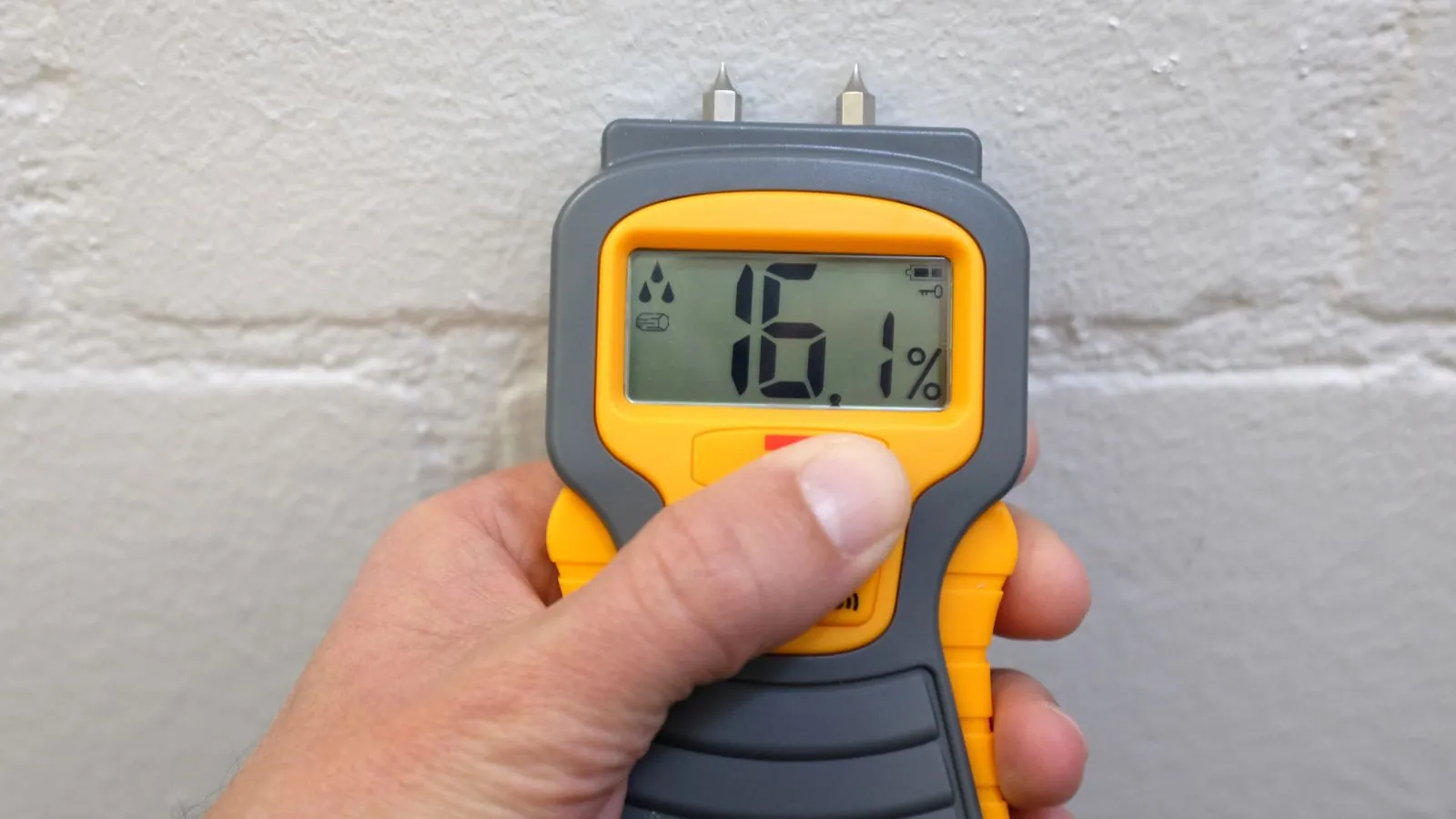
A crew places air movers to push air across wet surfaces and dehumidifiers to pull moisture from the air. Moisture meters track progress each day, and the equipment leaves only when readings match a dry reference.
The pump-out stage that comes before drying is on the water extraction page, and the floods and leaks that cause it are covered under flood damage cleanup.
Fans running for days, a humidifier hum and a higher electric bill: what drying looks like
People often search for what they see: loud fans, rented dehumidifiers and wet-looking wall bases. Those machines are the drying stage, and they run for days.
This page explains how many fans and dehumidifiers are used, how long they run, why they cannot be turned off early and what the readings mean.
How drying equipment works
| Equipment | What it does | Where it is used |
|---|---|---|
| Air mover | Moves air across wet surfaces to speed evaporation | Floors, walls and ceilings |
| LGR dehumidifier | Removes moisture from the air so materials can release more | Whole affected area |
| Drying mat | Pulls moisture from hardwood and floor assemblies | Wood and engineered floors |
| Moisture meter | Measures moisture in materials | Walls, floors and framing |
| Thermal imaging camera | Shows temperature patterns that suggest moisture | Scoping hidden wet areas |
How long drying takes
Drying often takes several days, and sometimes longer for dense materials like concrete or hardwood. The time depends on how much water the material absorbed, the air temperature and humidity and how many pieces of equipment are placed.
A crew compares readings in the wet area with a dry reference from an unaffected spot, because the target is that material's normal moisture level. Equipment stays until the numbers match, not for a fixed number of days.
The published industry reference for this work is the ANSI/IICRC S500 standard for professional water damage restoration. It describes water categories, drying goals and monitoring, and it is a standard the trade follows, not a certification claim about this company.
Why drying should not be rushed
Turning off equipment early leaves moisture in framing and subfloors. That moisture can lead to warping, swelling, odors and damage that shows up weeks later.
Daily visits to check readings and adjust equipment are part of the work. If a floor was affected, see hardwood floor water damage repair or carpet water damage restoration.
What a drying visit looks like
On the first day the crew maps the wet area, places equipment and records starting readings. On each return visit, they take readings at the same marked spots, adjust the airflow and move equipment toward the areas that are still wet.
If a spot stops improving, the crew looks for a reason. Trapped water behind baseboards, under flooring or inside a closed cavity is the usual cause, and a small opening often solves it.
What you can do while equipment runs
- Keep doors to the drying area closed so the dehumidifiers work on the wet space only.
- Leave the equipment plugged in and do not move cords or units without asking.
- Keep children and pets away from the machines.
- Report any new stain, smell or soft spot to the crew right away.
- Save your electric bill for the period, because insurers sometimes ask for it.
Walls or floors still damp after a leak? Call and we will plan measuring and drying.
☎ Call (973) 913-7863What shapes the cost of structural drying
Drying cost follows the equipment and the days, not only the square footage.
| Factor | Why it moves the price |
|---|---|
| Equipment count | More affected area needs more air movers and dehumidifiers |
| Days of drying | Dense materials take longer |
| Materials | Concrete, hardwood and plaster dry slowly |
| Access | Closed cavities need openings or special methods |
| Monitoring visits | Daily readings are part of the job |
| Rebuild scope | Repairs come after confirmed dry readings |
Exact prices for structural drying depend on what a technician finds on site, so any number given before that is a guess. Describe the damage on a call to (973) 913-7863 and the crew will explain the scope first.
Drying documentation and insurance
Moisture logs, equipment records and photos show what was wet and how it dried. Insurers often ask for them, so keep copies. Ask your insurer which documents they need.
Drying notes for Irvington
Humid summer air slows drying and makes dehumidifiers work harder, while heated winter air helps. The crew adjusts the setup to the season and the building.
In multifamily buildings, ask the owner about shared walls and floors that may have absorbed water. Crews also serve Maplewood and Newark.
Questions about structural drying and dehumidification in Irvington
How many fans and dehumidifiers will be needed?
It depends on the area and materials, and the crew calculates equipment from the affected size. More may be added if readings stall.
Can I turn off the equipment at night?
Please do not, since drying depends on continuous operation. Ask the crew about noise and power use beforehand.
Why does drying take several days?
Materials release moisture slowly, and dense ones like concrete and hardwood take longest.
Will drying raise my electric bill?
Yes, because the equipment runs continuously. Ask your insurer whether the added electric cost is covered.
Dry readings, not a calendar, decide when the job is done.
☎ Call (973) 913-7863