
Water Damage Restoration in Irvington, NJ
Water damage restoration in Irvington starts with one phone call. Dispatch answers around the clock at (973) 913-7863, and the first minutes of the conversation focus on stopping the water and protecting the people in the home.
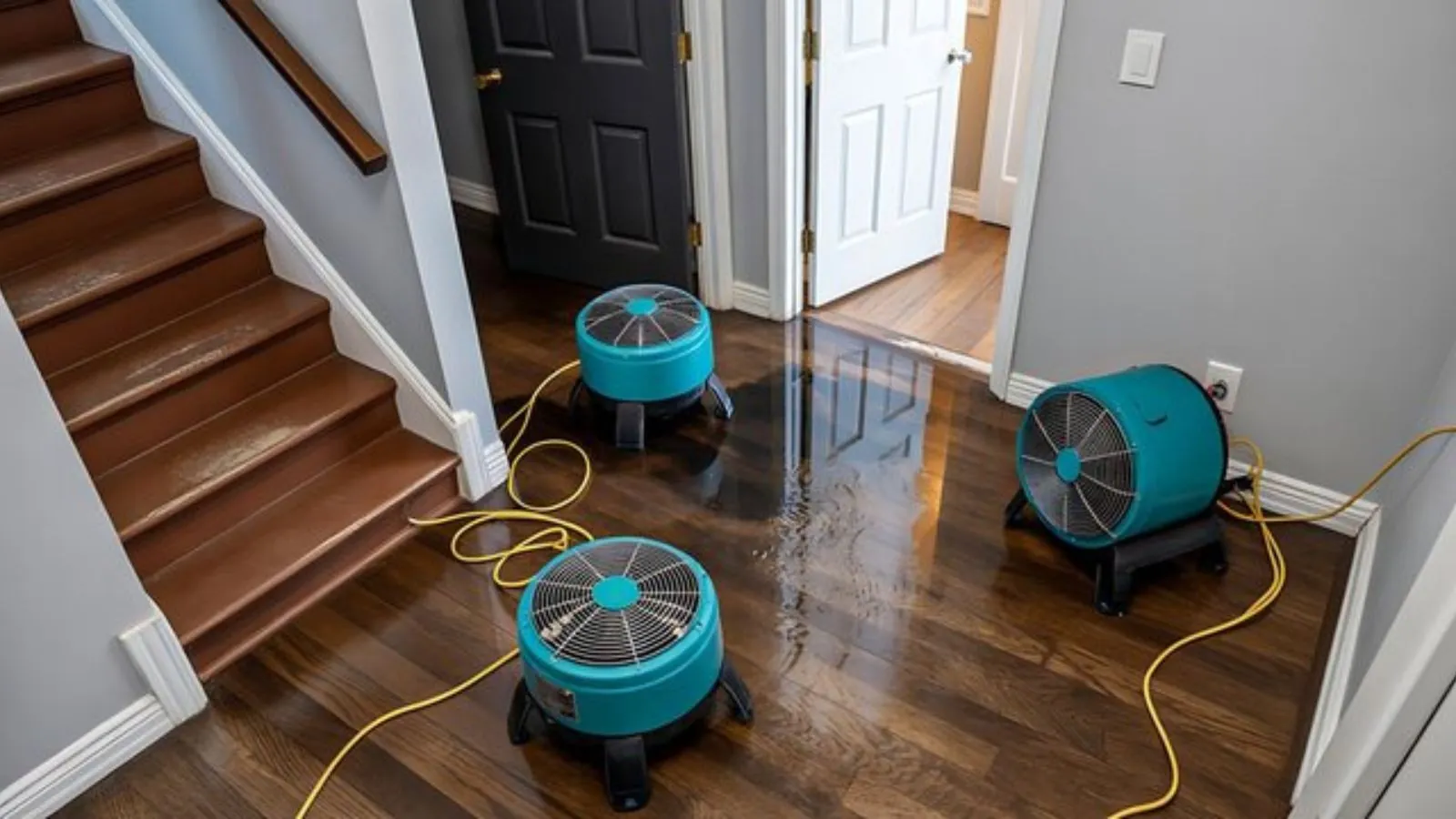
After that, a crew extracts standing water, measures how far moisture has traveled and dries the structure with air movers and dehumidifiers. Repairs come last, once readings show the walls and floors are dry.
We work from 1064 Clinton Avenue in Irvington, NJ 07111, and serve the township and nearby towns. Whether the loss is a burst pipe, a failed appliance or storm water in the basement, the steps are the same: stop the source, remove the water, dry the structure and document the work.
What to do in the first hour of a water emergency
The first hour decides how much of the building can be saved. Water moves into drywall, insulation and flooring within minutes, and the longer it sits, the more material has to be replaced.
- Close the main water valve if the source is a pipe or appliance.
- Stay out of water near outlets, cords or the electrical panel.
- Move people, pets, rugs and electronics out of the wet area.
- Photograph the source and the damage before anything is moved.
- Call the 24/7 line and tell the dispatcher what you see.
Electrical and gas safety
If water is near the panel or you smell gas, leave the building and call the utility or 911 before calling us. Do not walk through standing water that could be electrified.
How water damage restoration works
Restoration follows a fixed order because each stage depends on the one before it. A crew that skips ahead leaves moisture in the structure, which comes back as warped floors, stained walls and odors weeks later.
| Stage | What happens | Why it matters |
|---|---|---|
| Stop the source | Close valves, shut off the appliance, tarp the opening | Limits how much water enters |
| Extract | Pumps and vacuums remove standing water | Removes most of the water fast |
| Assess | Meters and thermal imaging map moisture | Finds water behind walls and under floors |
| Dry | Air movers and dehumidifiers run until readings match | Prevents hidden damage |
| Repair | Replace removed materials, patch and finish | Returns the space to normal use |
The extraction stage is described on the water extraction page, and the drying stage on the structural drying page. For a pipe that has failed, the burst pipe page covers what to do first.
Common causes of water damage in Irvington homes
Most calls come from a short list of causes. A supply line or a fitting fails, an appliance hose splits, a roof or flashing leaks in a heavy rain, or a drain backs up into the lowest floor.
Each cause has its own cleanup. Clean water from a supply line is the simplest, gray water from an appliance drain needs cleaning, and sewage or floodwater needs protective procedures and the removal of porous materials. The right response depends on the source, which is why the dispatcher asks where the water is coming from.
| Cause | Typical result | Page |
|---|---|---|
| Pipe failure | Water inside walls and floors | Burst pipe water damage |
| Roof or ceiling leak | Stains, sagging and wet insulation | Ceiling water damage repair |
| Heavy rain or flooding | Water in basements and ground floors | Flood damage cleanup |
| Appliance failure | Wet kitchen or laundry floors | Appliance leak water damage |
| Drain backup | Contaminated water at floor level | Sewage backup cleanup |
Houses, apartments and commercial space
A single-family house usually needs extraction and drying of one or two floors. In an apartment building, water often travels down through ceilings, so the unit below may need attention as well, and tenants and owners should each be told the same day.
Shops, offices and restaurants have to protect inventory and reopen quickly. Our commercial water damage restoration page describes how those jobs are run, including after-hours work and documentation for property managers.
How long does drying take?
Most clean-water losses dry in about three to five days, and larger or denser jobs take longer. Hardwood, plaster and concrete release moisture slowly, and humid air slows everything down.
The crew does not guess. It records moisture readings on day one, compares them with a dry reference from an unaffected area and returns to read them again. Equipment leaves only when the numbers match.
Safety and what we ask when you call
When you call, the dispatcher asks a short set of questions. They want the address, the source of the water, which rooms and floors are wet and whether the main valve is closed.
Those answers decide what equipment goes on the truck and what protective gear the crew needs. If the water came from a drain or the ground, the dispatcher will explain what to avoid until the crew arrives.