
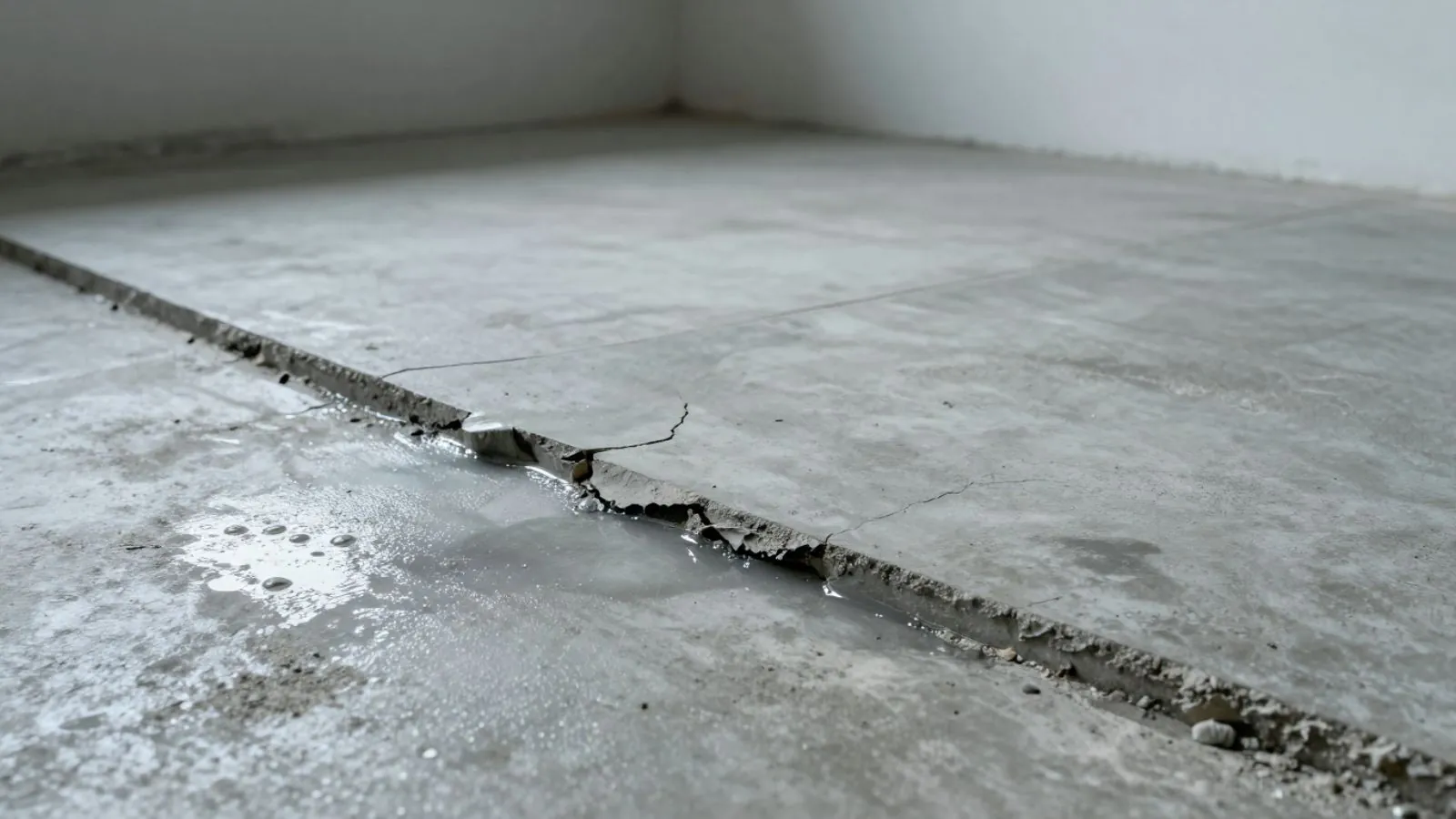
A water bill that rises with no change in how many people live in the house is often the first sign of a hidden leak. A toilet that runs, a pipe under a slab or a line inside a wall can waste water for weeks before a stain shows.
This guide covers how to check at home, what the results mean and who to call. If the leak has already wet floors or walls, the cleanup and drying are handled by a restoration crew, and the pipe repair is handled by a plumber.
Start with the toilets
Toilets are the most common source of a silent leak. A worn flapper lets water seep from the tank into the bowl, and the toilet refills again and again without anyone noticing.
To test, add a drop of food coloring to the tank and wait ten minutes without flushing. If color shows up in the bowl, you have a leak. Flush right away so the tank does not stain.
Check the meter with everything off
Shut off every faucet and appliance, including the ice maker and the washing machine. Read the water meter, wait two hours without using any water and read it again.
If the meter changes at all, you probably have a leak somewhere between the meter and your fixtures. If it does not change, the extra usage may come from a habit change, a seasonal use like lawn watering or a billing issue worth raising with the utility.
| Result | Likely meaning | Next step |
|---|---|---|
| Dye appears in the toilet bowl | Flapper or fill valve leak | Replace the part |
| Meter moves with everything off | Leak in the house or service line | Call a plumber |
| Meter is still but bill is high | Billing or seasonal use | Contact the utility |
| Warm floor or damp slab edge | Possible slab or hot water line leak | Plumber and leak detection |
| Sound of running water at night | Active leak in a supply line | Close the main and call |
Where hidden leaks tend to be
Outdoor spigots and irrigation lines leak outside the house, so a wet patch in the yard matters. Inside, look under sinks, behind toilets, around the water heater and near the washing machine hoses.
Leaks inside walls or under floors are harder, and clues include peeling paint, a musty odor, warm spots on the floor and the sound of water. A plumber can use leak detection equipment to find the exact place without tearing out more than needed.
When the leak has already caused damage
Once water has soaked drywall, flooring or insulation, the leak is only half of the problem. A plumber repairs the pipe, and a crew handles extraction and drying of whatever got wet.
If the clue was a warm floor, see our page on slab leak water damage. If the source was a pipe in a wall, see burst pipe water damage.
Ask the utility about your bill
Ask the water company for your usage history, and whether it offers any adjustment for leaks that are repaired. Policies differ, and keeping the plumber's invoice helps if you ask for one.
Write down the date and reading of the meter when you start your test. That gives you a clear record to show the utility.
Seasonal and household reasons for a higher bill
Not every jump is a leak. A new baby, house guests, a filling pool, a new washing machine or a long stretch of lawn watering can raise usage, and so can a billing period that is longer than usual.
Compare your bill with the same month last year and with the previous bill. If the increase matches a change in your life, the cause is probably use and not a leak.
If nothing changed and the meter test shows movement, treat it as a leak until a plumber says otherwise.
What a plumber will do
A plumber starts with the visible fixtures, then pressure tests the lines and may use acoustic or thermal tools to find leaks in walls and floors. The goal is to locate the leak with as little demolition as possible.
Ask for a written report that names the location and the date, since insurers and the water utility may want it. If the pipe is under the slab, ask about options such as rerouting a line versus repairing it in place.
Once the repair is made, run the meter test again to confirm that the meter no longer moves.
Keep a simple leak log
Write down the date and meter reading each time you test. A short log of readings shows the utility and your plumber exactly when the usage changed.
Leak checks from the water utility
New Jersey American Water's leak guidance recommends the same two checks: a drop of food coloring in the toilet tank with a ten-minute wait, and a meter reading before and after two hours of no water use. It says that if the meter changes at all, you probably have a leak.
The utility also describes an acoustic monitoring program to find leaks in its own underground pipes, so if water is surfacing in the street, report that to the utility. Dispatch also covers Maplewood and Newark.
Frequently asked questions
How much water can a running toilet waste?
A lot over time, since the leak is continuous and quiet. Even a small leak adds up to a visible increase on a monthly bill.
Can I fix a toilet leak myself?
Often yes, since flappers and fill valves are standard parts. A plumber can do it quickly if you prefer.
What if the meter moves but I cannot find a leak?
Call a plumber for leak detection. The leak may be in a wall, under a slab or in the line between the meter and the house.
Does a water leak always cause visible damage?
No. Many leaks run for weeks with no stain, which is why a bill jump is worth checking.
Leak found and floors or walls are wet? Call and we will plan the drying.
☎ Call (973) 913-7863