
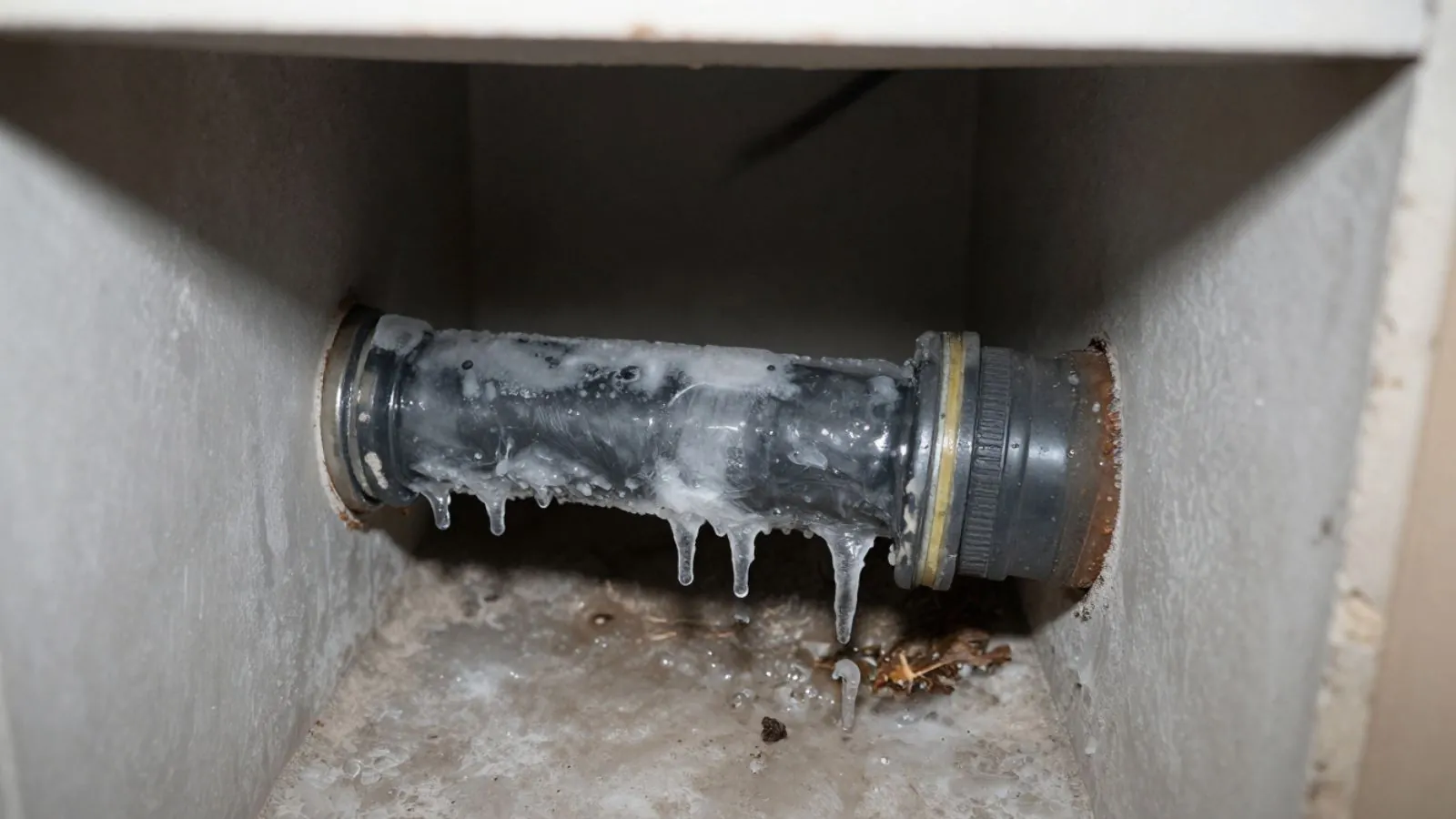
Water damage does not follow one calendar. Freezing pipes belong to winter, runoff to spring, thunderstorms and humid air to summer and clogged gutters to fall. Knowing the season helps you check the right place at the right time.
This guide is organized by season so you can use it as a yearly reminder. It describes mechanisms and does not claim how often any event happens in a particular year.
Winter: frozen and split pipes
Water expands when it freezes, and a pipe that cracks under ice may not leak until it thaws. Pipes in exterior walls, unheated basements, garages and crawl spaces are the usual victims.
Insulate exposed pipes, disconnect hoses and let a faucet drip during hard freezes. Our page on frozen pipe water damage covers what to do when one splits.
Spring: runoff, thaw and roof leaks
Melting snow and spring rain test the roof, the grading and the basement walls. Water that pools against a foundation looks for any crack to enter.
Check for new stains on upper ceilings, damp basement walls and downspouts that dump water near the house. Clear leaves and extend downspouts away from the foundation.
Summer: storms, humidity and AC leaks
Heavy summer thunderstorms can overwhelm gutters and drains, and humid air makes air conditioners produce a lot of condensate. A clogged condensate line can drip into a ceiling for weeks.
Have your cooling system checked before the hot season, and watch for stains below an air handler. See AC leak water damage for how those losses are dried.
| Season | Main risk | What to check |
|---|---|---|
| Winter | Frozen pipes | Insulation, drips, exposed lines |
| Spring | Runoff and roof leaks | Grading, ceilings, basement walls |
| Summer | Storms and AC condensate | Gutters, drain lines, pans |
| Fall | Clogged gutters and early storms | Gutters, roof, sump pump |
Fall: gutters, leaves and early storms
Leaves clog gutters and downspouts, and clogged gutters spill water at the wall. Fall is also when the tropical storm season is still active, so a pump and a clear drain matter.
Clean the gutters after the leaves drop, test the sump pump and disconnect outdoor hoses before the first freeze.
Year-round risks
Some sources of water do not care about the season: aging supply lines, washing machine hoses, water heaters near the end of their life and leaky toilets. Check them on a schedule, not only when the weather changes.
Replace rubber washing machine hoses on a regular schedule and look at the water heater for rust and moisture at the base. Pages on appliance leak water damage and water heater leak cleanup cover those losses.
A simple yearly calendar
- Late fall: insulate pipes, clean gutters, disconnect hoses.
- Early spring: check the roof, ceilings and basement walls after the thaw.
- Early summer: service the AC and clear the condensate line.
- Late summer: test the sump pump before the storm months.
- Every season: test the main shutoff valve.
Older buildings and multifamily houses
Older buildings often have older plumbing, tighter basements and walls that were insulated once or not at all. That does not mean they are unsafe, but it does mean seasonal checks matter more.
In multifamily houses and apartment buildings, water from one unit can reach another. Owners should set a routine for checking supply lines, appliance hoses and roof drains, and tenants should report drips in writing.
Photograph the condition of pipes and ceilings in good weather. Photos taken before a loss make it easier to show what changed afterward.
Vacant homes and seasonal absence
A house left empty for weeks is exposed in a different way. A small leak that would be caught within a day in an occupied home can run for weeks.
If you travel, close the main valve, set the heat to a safe level in winter and ask someone to check the house. Smart leak sensors are inexpensive and send a text if they detect water.
Tell your insurer if a home will be vacant for an extended time, since some policies limit coverage after a set period.
What to do when a seasonal risk becomes a loss
If a pipe splits, a storm sends water in or a condensate line overflows, stop the source, photograph it and call. Extraction and drying should begin before the water soaks into more materials.
Our water extraction and structural drying pages describe the first two stages of the response.
Write down what happened and when. A short record helps your insurer, your plumber and your restoration crew understand the loss.
The short version
- Winter: insulate pipes and let faucets drip in hard freezes.
- Spring: check ceilings and basement walls after the thaw.
- Summer: clear the AC condensate line and watch for stains.
- Fall: clean gutters and test the sump pump.
- All year: test the main valve and replace old hoses.
Put these dates on your calendar once and they will keep working every year. Small seasonal checks cost little next to a flooded floor.
Rainfall in the area
In 2021 the remnants of Hurricane Ida dropped 8.41 inches of rain at the National Weather Service station in Newark, a reminder that a single storm can overwhelm drains in a city next door to Irvington. Seasonal habits matter, but one storm can still produce a loss.
For climate records for the area, the National Weather Service's Newark station publishes monthly almanacs. Dispatch for this guide's topics also covers Maplewood and Newark.
Frequently asked questions
Which season is worst for water damage?
It depends on the type of loss. Winter brings frozen pipes, while spring and summer bring runoff and storms.
How do I stop pipes from freezing?
Insulate exposed pipes, keep cabinet doors open on exterior walls in hard freezes and let a faucet drip.
How often should I clean gutters?
At least twice a year, and after leaves fall. More often if trees overhang the roof.
When should I test my sump pump?
Before the wet season and again before storm months. Pour water into the pit to confirm it runs.
Seasonal leak turned into a loss? Call and describe what you see.
☎ Call (973) 913-7863