
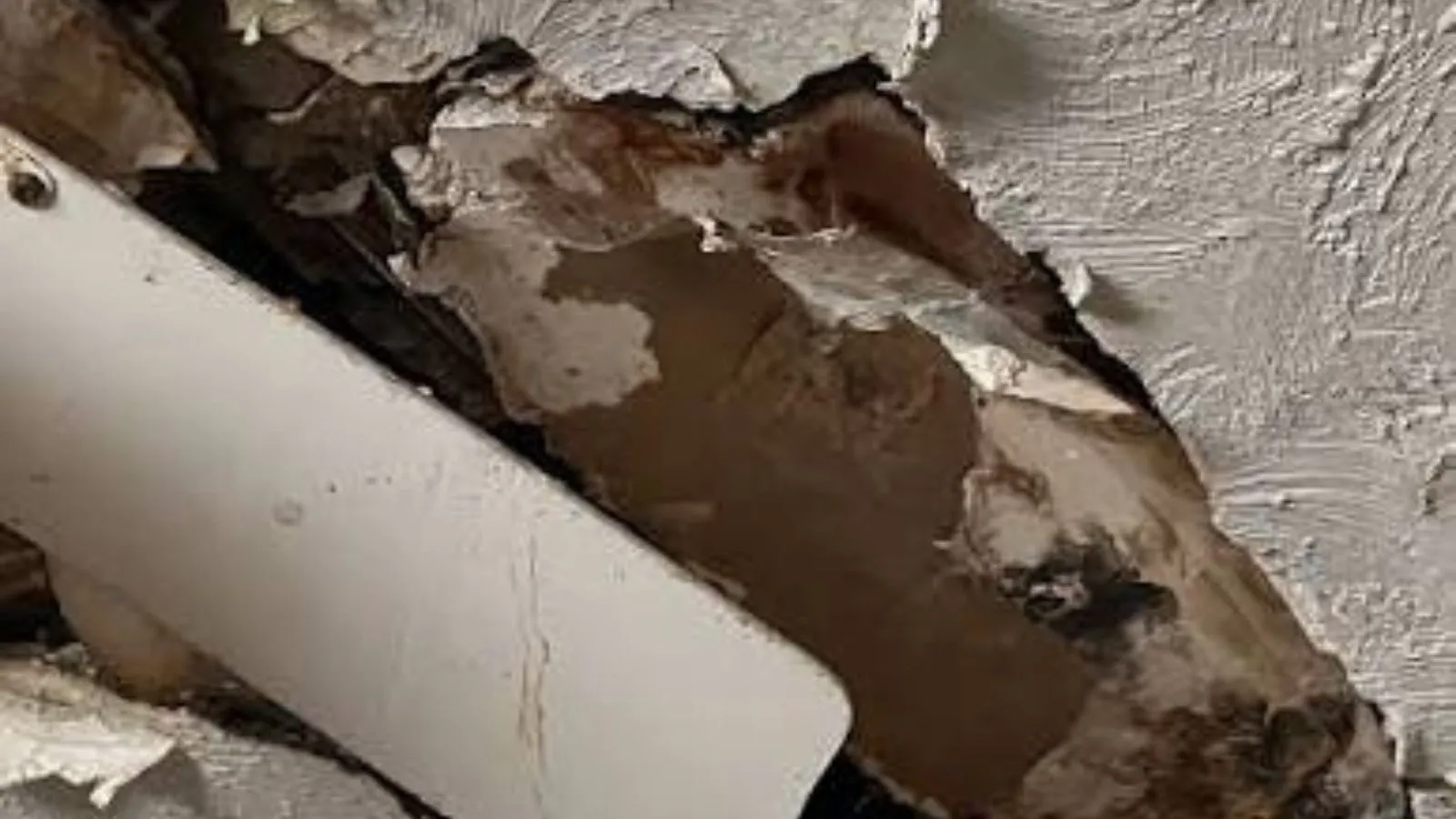
A musty smell that follows a leak or flood is usually a sign that some material is still holding moisture. The odor can come from carpet pad, the back of a wall, a closed cabinet or the space under a floor, and it often outlasts the visible damage.
This guide is about finding the source of the odor and getting it dry. It does not cover testing or removal of any growth, which is a separate subject, and if you see widespread discoloration you should ask about your local rules before hiring anyone.
Why odor lingers after the water is gone
Surface water is easy to see and remove. Moisture that soaked into porous materials such as drywall, carpet pad, wood and insulation can stay for days or weeks, and damp materials give off the stale smell people describe as musty.
That is why a room can look dry and still smell. The odor is telling you where the moisture is, which makes it a clue and not just a nuisance.
Common hiding places
| Location | Why it holds moisture | How to check |
|---|---|---|
| Carpet pad | Foam soaks up water and dries slowly | Lift a corner and press the pad |
| Wall bottoms and baseboards | Drywall wicks water upward | Moisture meter at the base |
| Under cabinets | Closed space with little airflow | Remove the toe kick and look |
| Under flooring | Water trapped beneath planks or vinyl | Meter readings at seams |
| Insulation in cavities | Holds water against framing | Thermal imaging and meters |
| Basement corners | Cool and low, slow to dry | Check humidity and wall bases |
Start with the room where the water was and work outward. A smell that is stronger near a wall or closet usually points to a cavity or a stored item.
Simple checks you can do
Press on the carpet with your hand to see if it is cool or damp. Look for stains, bubbling paint, warped baseboards and drips under sinks.
Place a hygrometer in the room if you have one. Indoor humidity that stays high after the leak is fixed suggests there is still a source of moisture or poor airflow.
A moisture meter is more reliable than your nose, and a technician uses one together with thermal imaging to scope the wet area without cutting into it.
Dry the source, not just the air
Air fresheners and sprays mask the smell for a day and leave the cause in place. Real removal means drying the material or taking it out when it cannot be dried.
That is where structural drying helps: air movers and dehumidifiers pull moisture from the material, and readings confirm that it has reached a dry reference. If the pad or board cannot be saved, it is removed and replaced.
Which materials are usually removed
Carpet pad and wet insulation are frequently discarded, because they dry slowly and cost little to replace. Drywall that is soft, stained and still wet after drying efforts is cut back past the wet line.
Solid wood framing and concrete are dried in place. See carpet water damage restoration and wall and drywall water damage repair for how those decisions are made.
Basements and closed spaces
Basements are cooler, so moisture takes longer to leave, and stored boxes and fabrics hold odor. Clear a path so air can move, and keep dehumidifier filters and drain lines clear.
If the smell is in a basement after a storm or a drain issue, see basement water damage cleanup. For a smell that comes with sewer odor from a floor drain, stop using water and call a plumber.
When to call a crew
- The smell returns after cleaning, or follows you from room to room.
- A wall, floor or ceiling is stained, soft or bubbling.
- The leak was days ago and the area has never been measured.
- Someone in the home reacts to the air indoors and you cannot find the cause.
- The water that caused it was sewage or floodwater.
A crew can measure the moisture, find the wet material and explain what can be dried and what must come out. Crews work in Maplewood and Newark as well as Irvington.
Keeping the odor from coming back
Once the area is dry, keep indoor humidity moderate with a dehumidifier or air conditioning, and use exhaust fans in kitchens and bathrooms. Fix any plumbing drip as soon as you see it.
Leave a little space between stored boxes and basement walls so air can move. Check the area again a week after drying to make sure the smell has not returned.
The short version
- Find the damp material by checking pad, wall bases and cabinets.
- Dry it with airflow and dehumidifiers until readings match a dry reference.
- Remove material that cannot be dried, like soaked pad and insulation.
- Do not rely on sprays or fresheners to hide the smell.
- Recheck the area a week later to confirm the odor is gone.
These five moves cover most cases. If the smell is still there after a week of drying, ask for moisture readings, because something is still wet.
Rental housing and persistent dampness
New Jersey's tenant habitability guidance says interior surfaces must be kept clean, smooth and free of flaking or peeling paint, and that for structural conditions a tenant should contact the local housing inspection agency. It also advises written notice to the landlord.
If you rent in Irvington and a damp odor persists after a leak, report it in writing with dated photographs, and ask what drying has been done.
Frequently asked questions
Why does my house smell musty after a leak?
Because some material is still damp. Carpet pad, the back of a wall or the space under a floor are common places.
Will a dehumidifier alone fix the smell?
It helps reduce humidity, but it will not remove moisture trapped in a wall or pad. The source has to be found and dried.
Can I just use an air freshener?
It masks the smell without fixing the cause. Treat the odor as a sign to look for moisture.
How long should drying take before the smell goes away?
Often several days for the materials to dry, and the smell fades as readings fall. If it persists, something is still wet.
Smell lingering after a leak? Call and ask for moisture readings to find the wet spot.
☎ Call (973) 913-7863