
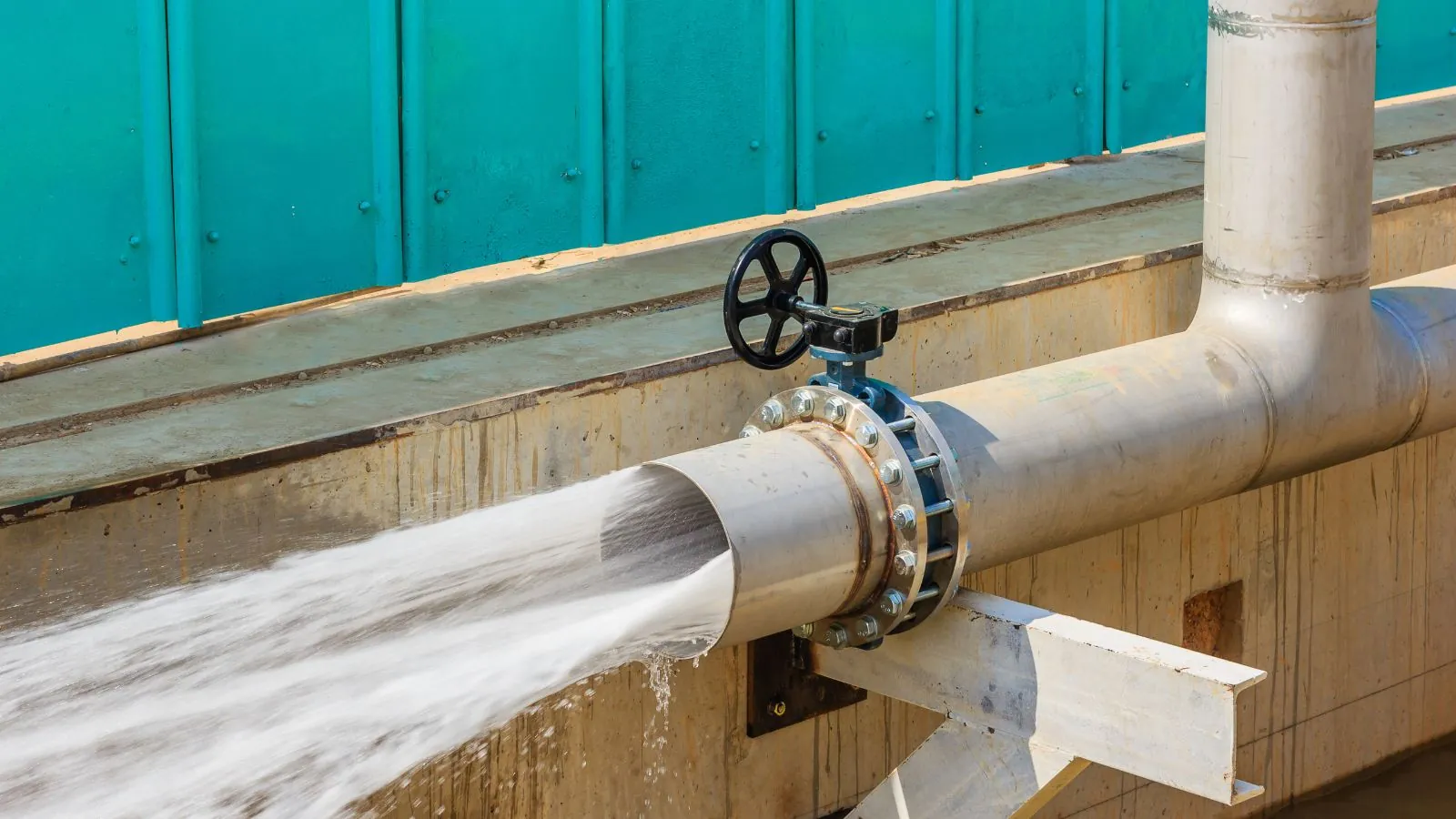
When a pipe bursts, every minute matters, and the fastest way to stop the damage is to close the main water valve. Many people do not know where theirs is until the water is already on the floor.
This guide explains how to find it, how to close it and what to do afterward. Take ten minutes to do it today, so you are not searching during an emergency.
Where the main valve usually is
In many homes the main shutoff is near the water meter or where the water line enters the house. That can be in a basement, utility room, crawl space or garage, or in a meter pit outside near the street.
In apartments and multifamily buildings, there may be a valve for your unit under a sink or in a utility closet, and a main for the whole building. Ask the building manager which is which.
| Home type | Where to look | Tip |
|---|---|---|
| House with a basement | Near the front wall, by the meter | Look where the pipe enters |
| Slab house | Utility closet or near the water heater | Check the garage too |
| Apartment | Under a sink or in a utility closet | Ask the manager for the building main |
| Older home | Basement front wall or outside meter pit | The valve may be stiff |
Know the two valve types
A gate valve has a round wheel handle that you turn clockwise several times to close. A ball valve has a lever handle that you turn a quarter turn, so the handle is perpendicular to the pipe when it is closed.
Gate valves in older homes can be stiff or stuck. Turn gently and never force a valve that will not move, because a broken valve is a bigger problem than a leak.
How to close it
- Turn the valve clockwise, or a quarter turn for a lever.
- Open a faucet at the lowest level of the house to drain water and relieve pressure.
- Open a faucet at the highest level to help the pipes drain.
- Check that the flow has stopped and the leak is no longer active.
- Turn off the water heater to avoid damaging it while the water is off.
If the valve will not close, call a plumber immediately and ask whether the street shutoff or the utility can help.
Test your valve once a year
Close the valve and open it again, just to make sure it moves. If it is stiff, ask a plumber to service or replace it before you need it.
Tag the valve with a bright label and write its location on the inside of a cabinet door where everyone can see it.
Individual fixture shutoffs
Sinks, toilets, washing machines and dishwashers have their own small valves. Closing one of these stops a single fixture without shutting off the whole house.
Learn where they are, and turn each one once a year so they do not seize. For appliance failures, see appliance leak water damage.
After the water is off
Once the flow stops, photograph the source and the damage, move belongings off wet floors and call for extraction and drying. Our page on burst pipe water damage explains what comes next.
Call a plumber for the repair and a restoration crew for the water. Crews serve Maplewood and Newark as well as Irvington.
What if the problem is outside?
If water is surging at the street, from a hydrant or from a service line before the meter, it is a utility problem. Call the water utility, and close your own valve if water is also entering your property.
Plan for your household
Show every adult and older child where the valve is, and practice closing it together. A tool such as a valve key or a wrench may be needed for outside valves, so keep it next to the card with the valve location.
In a rental, ask for written instructions from the landlord and keep them with your lease. If the landlord has a plumber or emergency number, save it in your phone.
Smart shutoff devices
Some homeowners add a smart valve that closes the main automatically when a sensor detects water or unusual flow. These devices are installed by a plumber, and they can limit the damage while you are away.
Even with one, know how to close the valve by hand. A battery or network problem can leave the device unable to act when you need it.
The short version
- Find the main valve today and label it.
- Learn whether it is a gate valve or a lever.
- Test it once a year so it does not seize.
- Close it, then drain pressure from a low faucet.
- Call a plumber for the repair and a crew for the water.
Share the list with everyone in the home, including older children. The person who is standing next to the leak is the one who needs to know.
State storm guidance on shutoffs
New Jersey's hurricane guide says to know where your gas, electric and water utility shutoff valves are and how to use them. It also says that if you evacuate, turn off the main electrical power switch and the main water valve and unplug appliances.
Write the locations on a card, share them with everyone in the household and check that they work before the season begins.
Frequently asked questions
What if I cannot find my main valve?
Check near the meter, the front wall of the basement and utility closets. Ask a plumber or the building manager if you still cannot find it.
Will shutting the water off hurt anything?
Not usually. Turn off the water heater so it does not run dry, and open a faucet to relieve pressure.
The valve will not turn. What now?
Do not force it. Call a plumber and the water utility, and move belongings away from the water.
Does the water company shut off the main for me?
The utility controls the street side. Call them for problems outside the meter, and use your own valve for problems inside.
Pipe burst and the main is off? Call now so extraction and drying can start.
☎ Call (973) 913-7863