
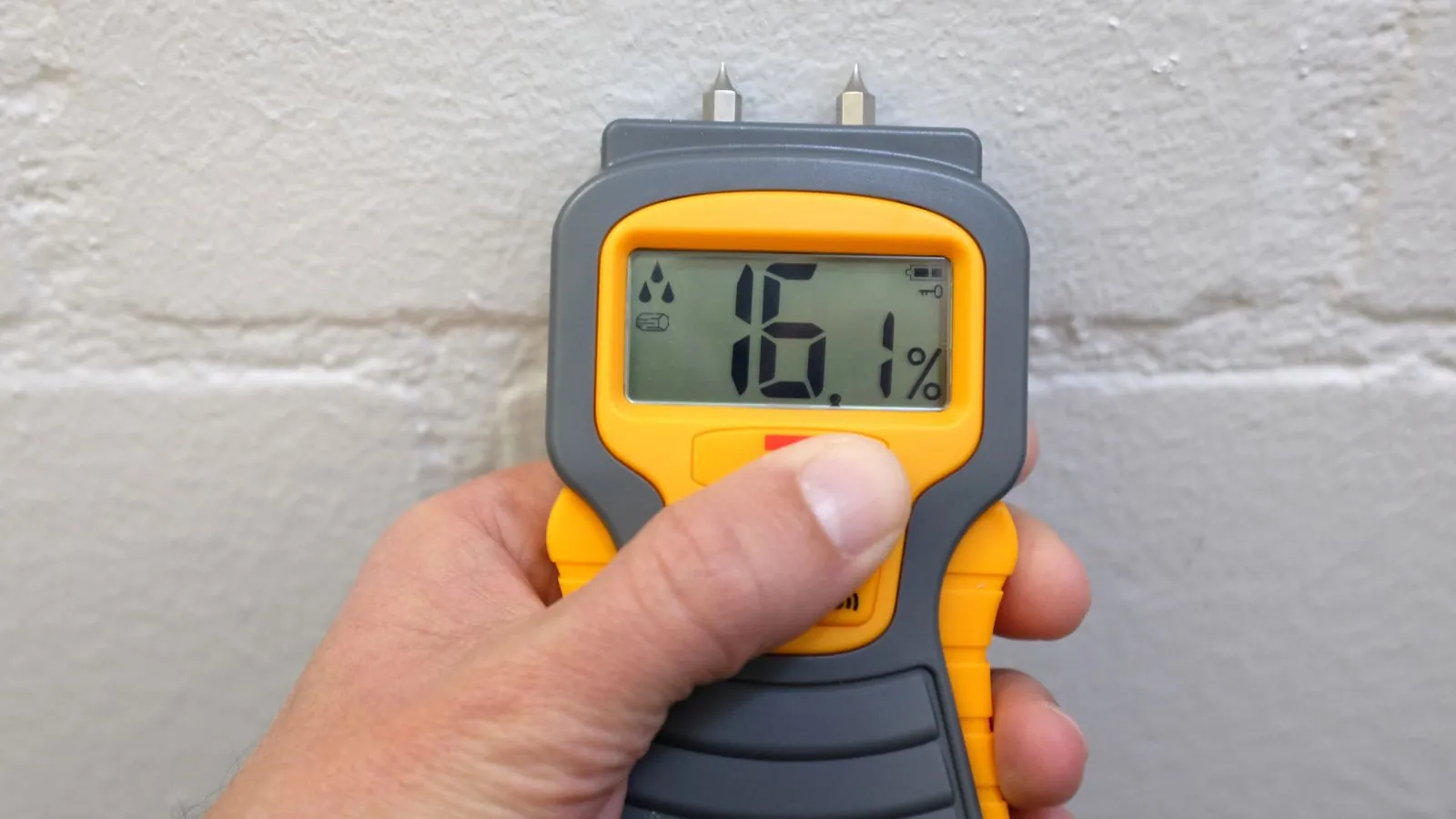
The honest answer to how long drying takes is that it depends. Drywall may dry in a few days, while hardwood, plaster and concrete can take much longer. The number of days is a result of the readings, not a plan made in advance.
This guide explains what controls drying time, what the crew measures and why equipment stays until the numbers match a dry reference.
The usual range
A typical clean-water loss in a house is often dried in about three to five days when the response is fast and the materials are standard. Dense materials, deep water and humid weather can stretch that to a week or more.
These are general ranges and not promises. A crew that gives you a firm number on the phone without seeing the damage is guessing.
| Factor | Faster drying | Slower drying |
|---|---|---|
| Material | Drywall, thin carpet | Hardwood, plaster, concrete |
| Time before response | Hours | Days |
| Amount of water | Small area | Whole floor or several rooms |
| Indoor air | Warm and dry | Cool and humid |
| Access | Open surfaces | Closed cavities and under floors |
| Equipment | Matched to the area | Too little for the size |
How the crew measures progress
On day one, the crew records moisture readings at marked points on walls, floors and framing. They also take a dry reference reading from an unaffected area of the same material, an approach described in the ANSI/IICRC S500 standard for water damage restoration.
Each visit repeats the readings in the same places. The goal is for the wet readings to fall to match the dry reference, and equipment stays until they do.
Why humidity matters
Drying works by moving moisture from the material into the air and then removing it from the air. If the air is already saturated, there is nowhere for the moisture to go.
That is why dehumidifiers are part of the setup, and why a closed room works better than an open window in humid weather. Our page on structural drying shows how the equipment is set up.
Materials that take longer
Hardwood floors and subfloors take longer and need drying mats. Plaster walls and masonry release moisture slowly. Insulation inside a closed cavity can hold water against framing for a long time if it is not removed.
For floors, see hardwood floor water damage repair, and for slabs see slab leak water damage.
What you can do to help
- Keep doors and windows closed in the drying area unless the crew says otherwise.
- Do not turn off or move the equipment.
- Remove items from the wet area so air can reach surfaces.
- Report new smells, stains or soft spots right away.
- Be available for the crew's return visits.
Signs the job is not done
A lingering smell, a floor that is still cool to the touch, paint that continues to bubble or a meter that reads higher than the dry reference all mean there is still moisture.
Do not close walls, install flooring or paint until the crew confirms dry readings. Closing early traps moisture and can lead to bigger repairs later.
What happens after drying
When readings match, the equipment is removed and the repair stage begins. Wet insulation and damaged drywall are replaced, and floors and paint are finished.
Crews dry homes in Irvington, Maplewood and Newark, and the process is the same wherever the water is.
A typical drying timeline
| Day | What happens | What the crew checks |
|---|---|---|
| Day 1 | Extraction, equipment placed, starting readings | Wet areas and dry reference |
| Day 2 | Adjust equipment and open cavities if needed | Readings against day one |
| Day 3 | Continue drying, check stubborn spots | Walls, floors and framing |
| Day 4 or later | Final readings and equipment removal | Match to the dry reference |
This table is an example and not a promise. Smaller losses finish sooner, and dense materials or large areas take longer.
What if drying stalls?
Sometimes readings stop improving. The usual causes are trapped moisture in a cavity, water under flooring, wet insulation or too little dehumidification for the space.
A crew responds by opening a small section, adding equipment or changing the airflow. It is a normal part of the job and not a sign that something went wrong.
If you think drying has stalled, ask to see the readings. A good crew will show you the numbers and explain what is changing.
The short version
- Most clean-water jobs take several days.
- Dense materials and humid air take longer.
- Readings decide when equipment leaves, not the calendar.
- Do not close walls or floors until dry readings are confirmed.
- Ask to see the numbers.
Living at home during drying
Equipment is loud and runs day and night, and the air in the affected rooms can feel warm and dry. Plan for noise, and ask the crew which rooms you can use.
Keep pets and children out of the drying area and away from cords. If sleeping is difficult, ask whether equipment can be placed so that a bedroom stays quiet, and keep in mind that turning it off early slows the job.
Summer humidity in the Newark area
Based on 1991 to 2020 normals from the National Weather Service station at Newark, the normal mean temperature for July is 78.2 degrees and the normal rainfall is 4.66 inches. The wettest July on record there was 2020, with 11.22 inches.
Warm, wet months make indoor air humid, which is why crews often add dehumidification and keep the drying area closed in summer. Cooler, drier air in winter helps, though heating dries wood floors unevenly.
Frequently asked questions
How many days does water damage take to dry?
Often three to five days for clean-water losses with a quick response, and longer for dense materials or large areas. Readings decide.
Can I speed up drying with a fan?
A fan helps a little, but it moves moisture around without removing it. Dehumidifiers and proper airflow work better.
Why is my wall still wet after a week?
Moisture trapped in a cavity or in insulation dries slowly. The crew may need to open a small section.
When can I rebuild?
After the crew confirms that readings match the dry reference. Rebuilding early traps moisture.
Wondering whether your home is dry? Call and ask for moisture readings.
☎ Call (973) 913-7863