
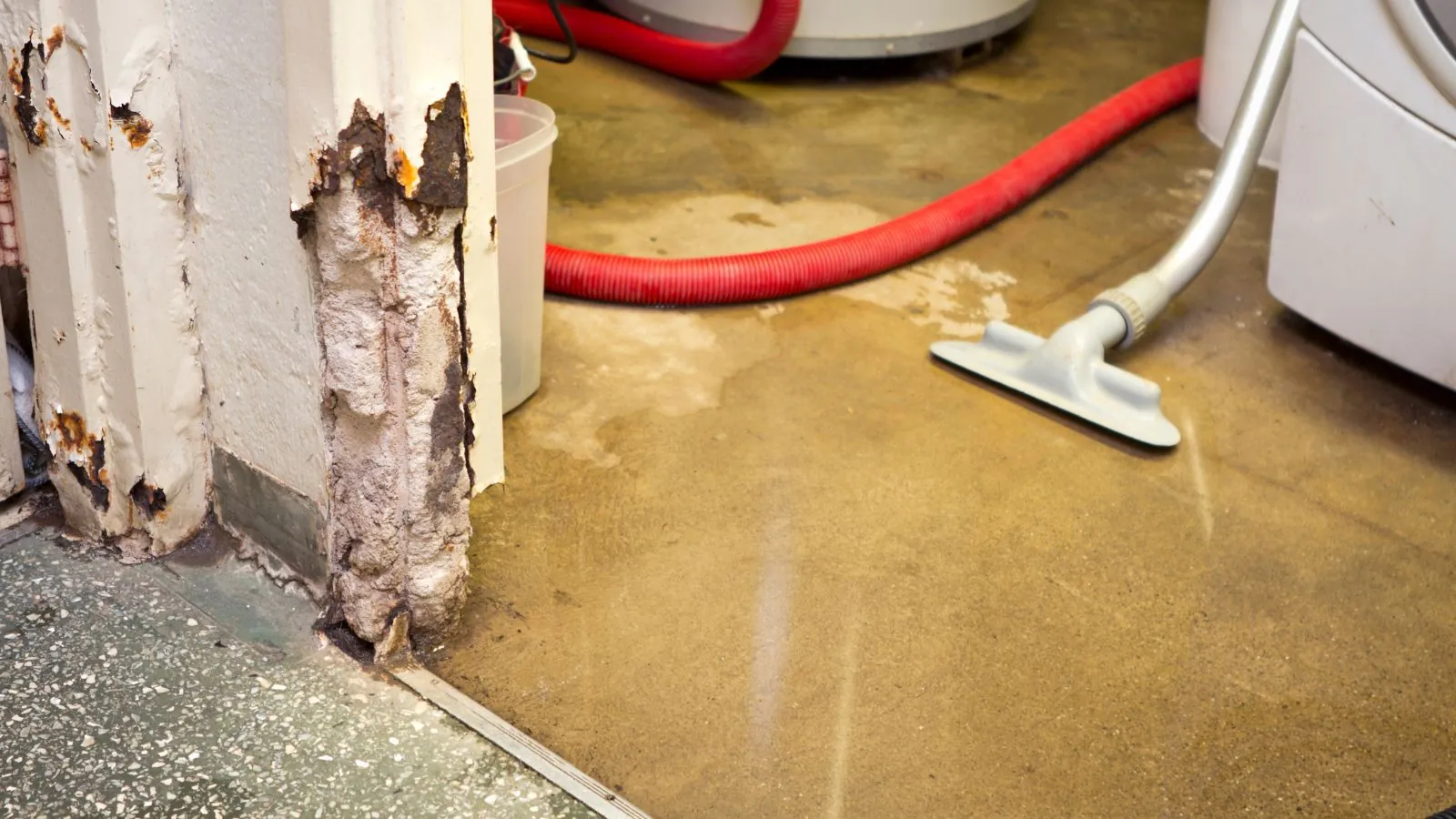
Most standard homeowners policies cover water damage that is sudden and accidental, like a supply line that bursts or a washing machine hose that splits. They usually do not cover water that rises from the ground, seeps through a foundation or backs up from a sewer unless you added coverage for it.
This guide explains the difference in plain terms so you can read your own policy with a clear idea of what to look for. It is general information and not advice about any particular policy, so your insurer and your policy language decide your actual coverage.
The difference between sudden and gradual water damage
Insurers sort water losses by how they happen. A pipe that bursts overnight is sudden. A pipe fitting that dripped for six months behind a wall is gradual, and many policies treat gradual leaks as a maintenance problem rather than a covered loss.
Because the line between the two matters so much, the dates in your photos and your plumber's report carry weight. Evidence that shows when the leak began, and that it was found quickly, supports a sudden-loss claim.
| Cause of the water | Often covered? | What to check |
|---|---|---|
| Burst or frozen pipe | Often yes | Whether the home was heated and maintained |
| Appliance hose or valve failure | Often yes | Wear and tear and maintenance exclusions |
| Roof leak from storm damage | Often yes | Whether the roof was damaged by a covered event |
| Long-term seepage or leak | Often no | Gradual damage or continuous seepage exclusions |
| Rising floodwater or groundwater | Usually no | A separate flood policy or endorsement |
| Sewer or drain backup | Usually no | A water backup endorsement |
Flood coverage is separate
A standard homeowners policy does not cover flooding from rising water. Flood coverage comes from a separate policy, often through the National Flood Insurance Program or a private insurer, and a new flood policy typically takes effect 30 days after purchase, according to New Jersey's insurance regulator.
That waiting period is a good reason to look at your flood coverage before a storm and not during one. If your property is in a mapped flood zone, a mortgage lender may require it, and even outside one, water from heavy rain can still enter a low basement.
Sewer backup and the endorsement that covers it
When a drain or sewer line backs up into a basement, the standard policy often excludes the loss. Many insurers sell an endorsement or rider that adds limited coverage for water backup, with its own dollar limit.
If you have a finished basement or a washer and dryer on a lower level, ask your agent whether you have the endorsement and what the limit is. The dollar cap is often lower than people expect, so it is worth reading before the day you need it.
Does the policy pay for the pipe itself?
Often it covers the damage the water caused but not the cost of repairing the failed pipe or appliance. A plumber's repair of the supply line is typically yours to pay for, while the drywall, flooring and drying equipment may be part of the claim.
Some policies also have a separate, lower limit for the cost of tearing out and replacing parts of the structure to reach the leak. Ask your insurer how that works when the leak is inside a wall or under a slab.
What to do before you open a claim
- Stop the water and protect the property from further damage.
- Photograph and video the source and every affected room before cleanup.
- Keep damaged items until the insurer says they can be discarded, or photograph them first.
- Save receipts for emergency work, equipment and temporary housing.
- Read the declarations page for your deductible and your water-related limits.
A restoration crew can extract water and start drying while you are waiting for an adjuster. Our water extraction and structural drying pages explain what that work involves, and the same crew works in Maplewood and Newark as well as Irvington.
Reading your declarations page
The declarations page lists your deductible, your coverage limits and any endorsements. Look for the dwelling limit, the personal property limit and any special limits for water backup or mold.
Then read the exclusions section for the words flood, surface water, continuous or repeated seepage and wear and tear. Those phrases show where an insurer is likely to draw the line on a water loss.
If something is unclear, ask your agent to explain it in writing. A written answer is easier to rely on later than a recollection of a phone call.
Deductibles and small losses
A deductible is the amount you pay before the insurer pays. If a loss is only slightly above your deductible, a claim may not be worth the possible effect on future premiums or renewal.
That decision depends on your insurer and your history, and it is yours to make. Getting a repair estimate first tells you how the loss compares with your deductible.
Dry the area either way. Unaddressed moisture can turn a small covered loss into a larger one that is harder to prove.
New Jersey insurance rules you can check
The New Jersey Department of Banking and Insurance runs a consumer hotline at 1-800-446-7467, open weekdays from 8:30 a.m. to 5:00 p.m., for questions about a claim. Its storm-claims guidance also states that you are not required to use the insurance company's recommended contractor.
Because new flood policies generally take effect 30 days after purchase, buying one right before a forecast storm usually does not help. Ask your agent for the exact effective date in writing.
Frequently asked questions
Does insurance cover a pipe that burst in winter?
Often yes for the resulting damage, if the home was kept heated or the owner took reasonable steps. Policies differ on vacancy and maintenance, so confirm with your insurer.
Will my policy cover mold after a leak?
Many policies limit or exclude mold coverage. Ask your insurer about any mold sublimit, and dry the area quickly because that is what prevents the problem.
Are water damage and flood damage the same thing?
No. Insurers treat rising or surface water as flood and plumbing or appliance water as water damage, and they are covered differently.
Do I have to use the insurer's contractor?
No. New Jersey's insurance regulator says homeowners are not required to use the contractor recommended by the insurance company.
Not sure whether a leak is covered? Dry it first, then ask your insurer, because delay only adds to the loss.
☎ Call (973) 913-7863