
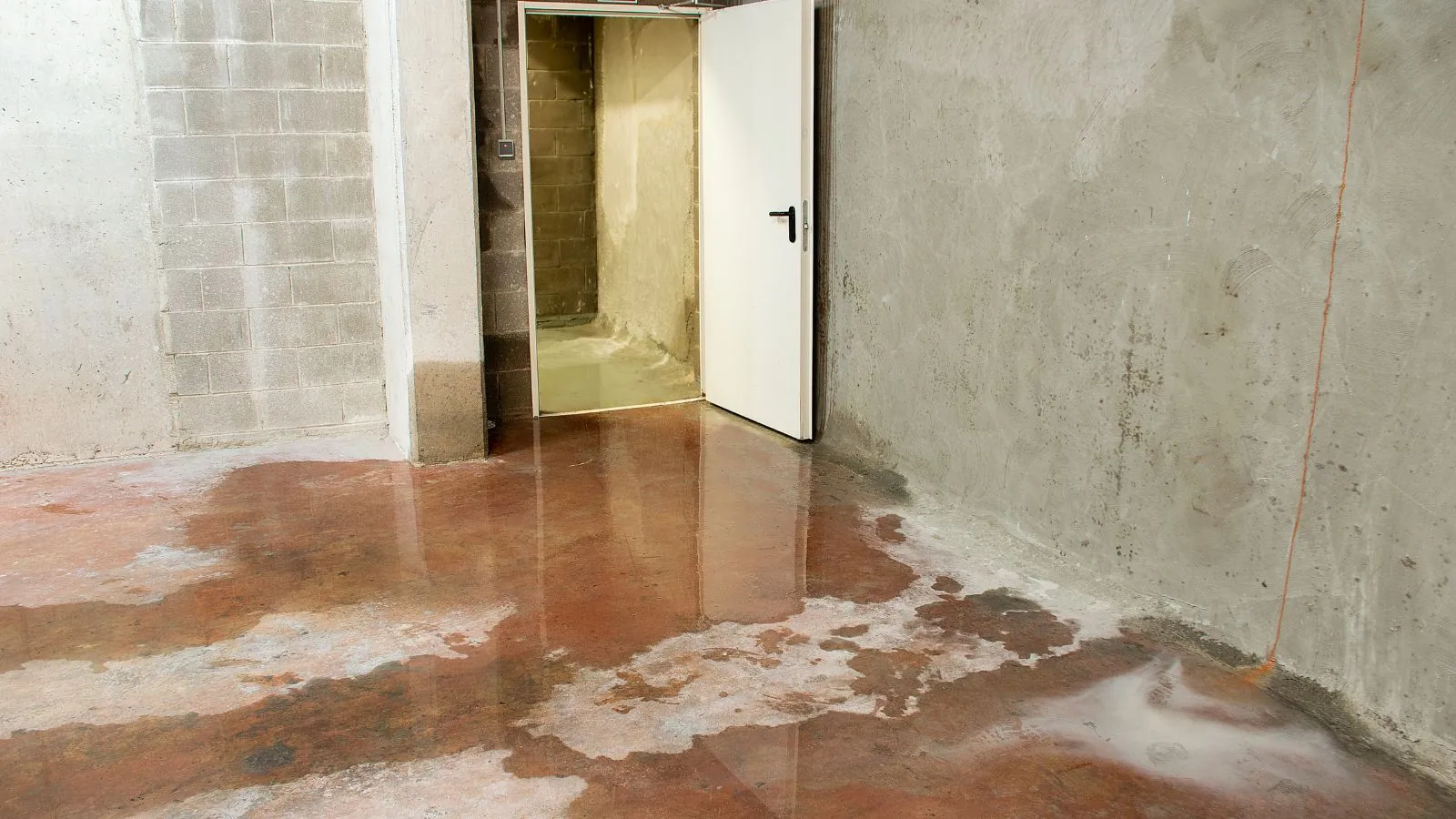
Past water damage is one of the costliest surprises in a house, and it does not always show in listing photos. A buyer who knows where to look can catch signs of leaks, flooding or poor drainage before closing.
This checklist is for walk-throughs and showings. It does not replace a professional home inspection, which is the right next step for any house you are serious about.
Start outside
Walk around the house and look at the grading, gutters and downspouts. Soil that slopes toward the foundation, downspouts that dump at the wall and cracks in the foundation all suggest water problems.
Look at the roof from the ground for sagging, missing shingles and stained fascia. Check window wells and exterior walls for staining or efflorescence, the white powdery mineral deposit that water leaves on masonry.
Check ceilings, walls and floors
| Sign | Where to look | What it may mean |
|---|---|---|
| Brown or yellow rings | Ceilings and wall tops | Roof, plumbing or AC leak |
| Fresh paint in one patch | Ceilings, basement walls | Cover-up of an old stain |
| Warped or cupped flooring | Kitchen, bath, entries | Moisture below or a leak |
| Soft or crumbling drywall | Wall bottoms | Long-term moisture |
| Musty odor | Basements, closets, cabinets | Damp materials somewhere |
| Rust or stains on pipes | Under sinks, at the water heater | Slow leak at fittings |
Press gently on suspect areas and bring a flashlight. A moisture meter is a useful tool that many home inspectors carry.
Look in the basement and utility areas
Basements tell the story. Check for a waterline on stored items or walls, a floor drain and sump pit, rust on the base of the furnace or water heater and efflorescence on masonry.
Ask whether the owner uses a dehumidifier all year. A basement that needs one is not necessarily a problem, but it is a reason to ask more questions.
Read the seller disclosure
Sellers fill out a property condition disclosure statement about known problems. Read the water and flooding answers closely, and compare them with what you see.
Ask directly whether there has ever been water in the basement, a roof leak, a plumbing failure or an insurance claim for water damage, and ask for the repair records.
Ask about flood zones and history
Look up the address on the FEMA flood map and ask the seller about flooding history. A house outside a mapped flood zone can still take on water in a heavy rain, so history matters.
Ask your insurance agent for quotes on both homeowners and flood coverage before you commit, since premiums vary with the property.
Bring in a professional
A licensed home inspector checks the visible condition of the house and can note signs of moisture. If something looks off, ask a restoration company to take moisture readings and tell you what they find.
Our structural drying page explains what those readings mean, and crews can look at properties in Maplewood and Newark as well as Irvington.
Use what you find in negotiation
If you find signs of water damage, you can ask for repairs, a price reduction or a credit, or you can walk away. Get repair estimates in writing so the numbers are clear.
Do not rely on a verbal promise that the problem was fixed. Ask for invoices, permits where they apply and a description of what was done.
Questions to ask the seller or agent
- Has there ever been water in the basement, and when was the last time?
- Has the roof, a pipe or an appliance leaked, and who repaired it?
- Has an insurance claim been filed for water or flood damage?
- Are there warranties or invoices for waterproofing or drainage work?
- Does the basement stay dry in heavy rain, and does the owner use a sump pump?
Write the answers down and compare them with the disclosure form and the inspection report. Gaps between them are the part to follow up on.
Condos and multifamily buildings
In a condo or co-op, ask the board or management about past leaks, special assessments for roof or plumbing work and the building's insurance. A leak from a neighboring unit is a building issue, and the history may be in the meeting minutes.
For a two or three unit house, ask about each unit's plumbing and appliances. Water damage in one apartment can show up on a ceiling in another.
The short version
- Walk the outside for grading, gutter and foundation problems.
- Look for rings, soft spots, warped floors and fresh patches of paint.
- Check the basement for waterlines, rust and efflorescence.
- Read the disclosure and ask direct questions about history.
- Get an inspection and moisture readings before you commit.
Take this list to every showing. A buyer who asks these questions early has more room to negotiate and more time to walk away.
New Jersey flood disclosure
Since March 20, 2024, New Jersey sellers of residential and commercial property must use an updated property condition disclosure form that asks whether the property is in a FEMA Special Flood Hazard Area or a Moderate Risk Flood Hazard Area. It also asks whether the property has had flood damage, water seepage or pooled water from heavy rain.
Read those answers carefully, and use the FEMA flood map to check them yourself. The same form asks whether the property is subject to a federal flood insurance requirement.
Frequently asked questions
What is the most reliable sign of past water damage?
A stain or warped surface combined with a high moisture reading. A fresh patch of paint in one spot is also a reason to ask.
Can a home inspector find hidden water damage?
They can spot many signs and use a moisture meter. For a deeper look, a restoration company can take more detailed readings.
Does a flood zone mean the house floods?
Not necessarily, but it means the location has a higher mapped risk. Ask about history and about flood insurance costs.
Should I ask for the seller to repair water damage?
You can ask for repairs, a credit or a price change. Get estimates in writing before negotiating.
Found something that worries you? Call and ask whether moisture readings can help.
☎ Call (973) 913-7863